 Arc
Arc Base
Base Optimism
 Arbitrum
 Ethereum
 Avalanche
 Polygon
 Circle CCTP
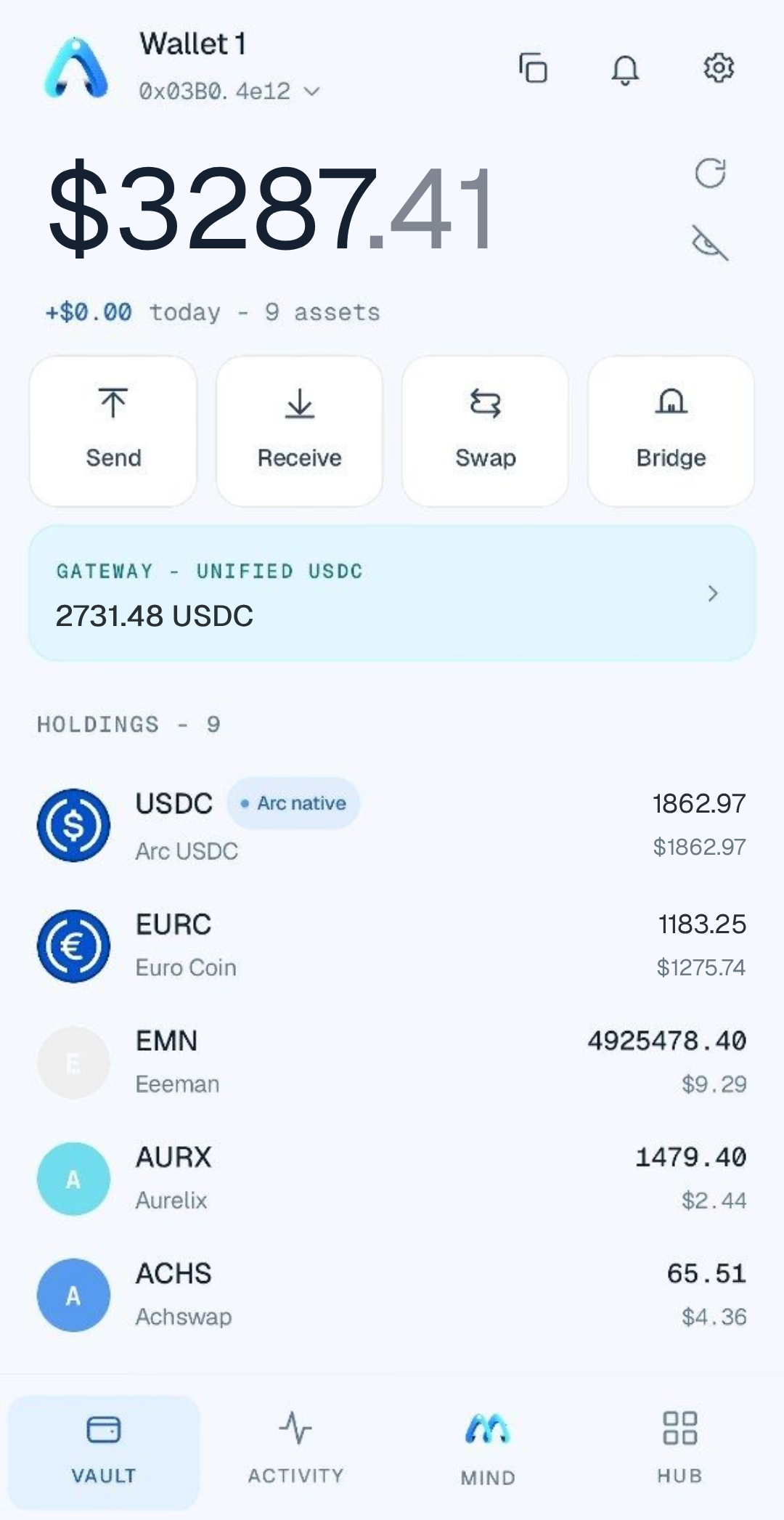
A focused self-custody home.
Wallets, balances, tokens and actions stay organized around the next decision, not scattered across disconnected screens.
- Designed for repeated mobile workflows
- Readable before the user signs
iArcana brings Vault, Circle-powered USDC flows and Mind into one wallet built for deliberate signing, readable operations and local control.
Local signing. Structured review. Mind where it matters.
Wallets, balances, tokens and actions stay organized around the next decision, not scattered across disconnected screens.
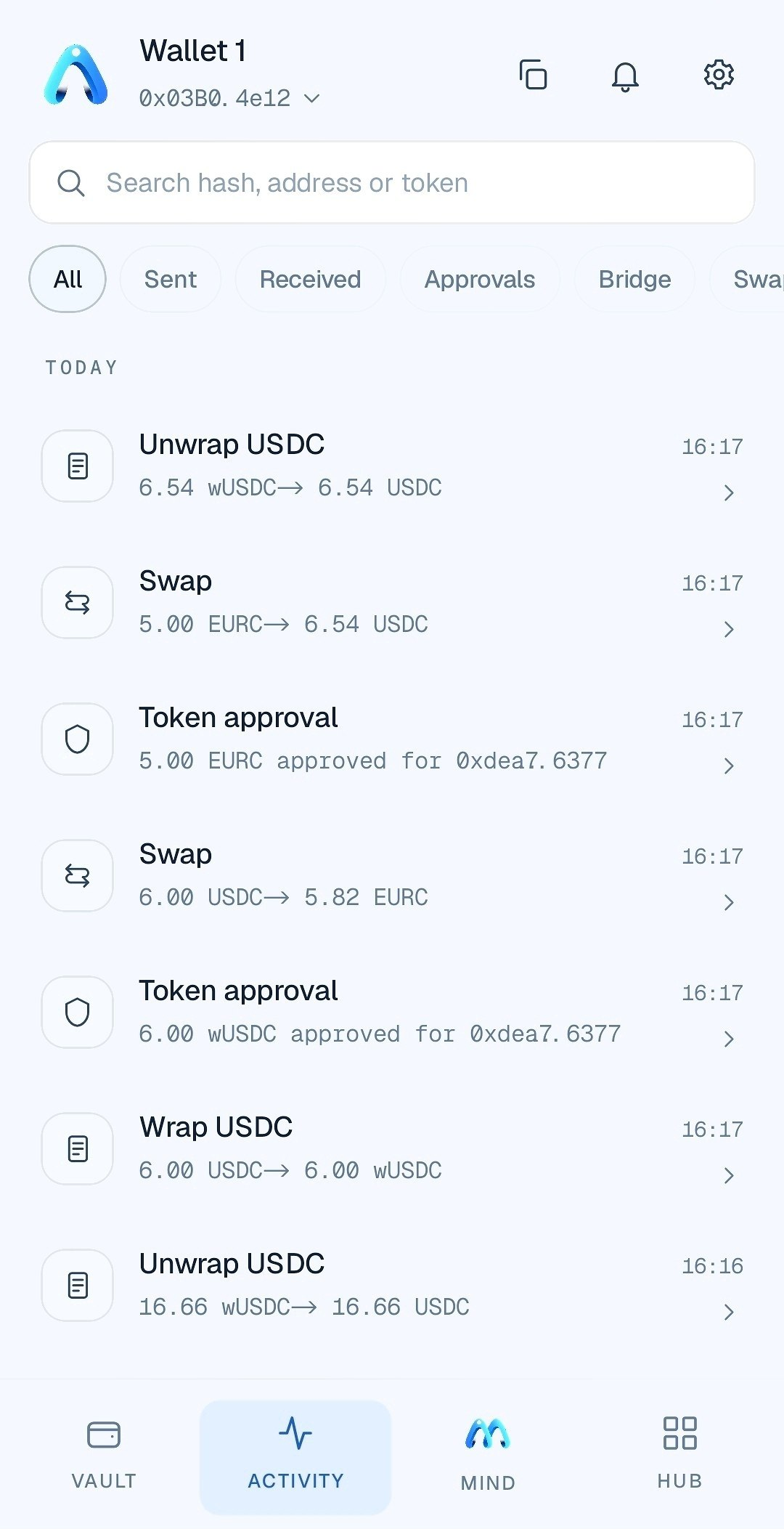
Explorer events and local Gateway records become a practical timeline, with details available when the user needs proof.
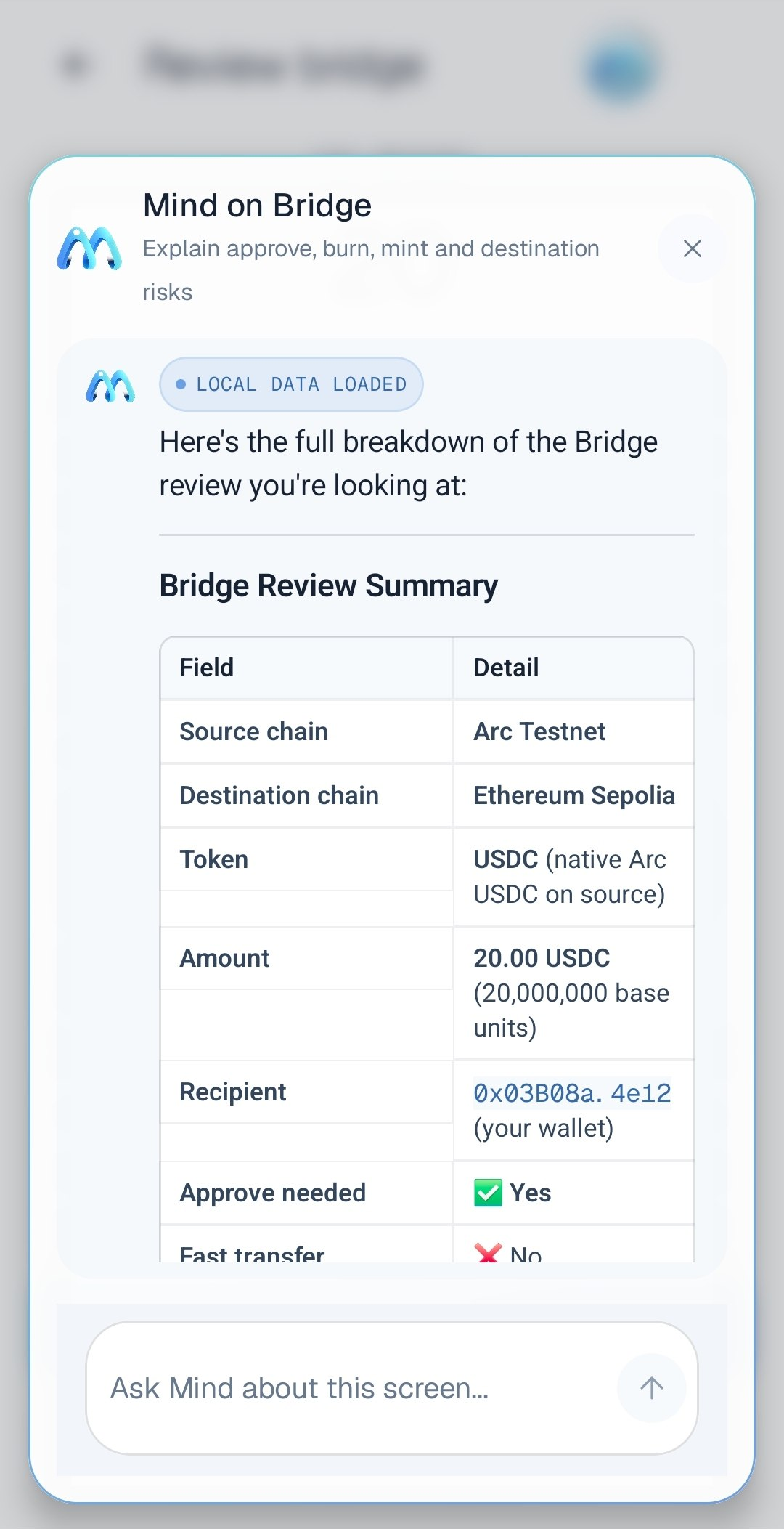
Mind opens over review screens and reads the operation in front of the user: route, fees, warnings and next steps.
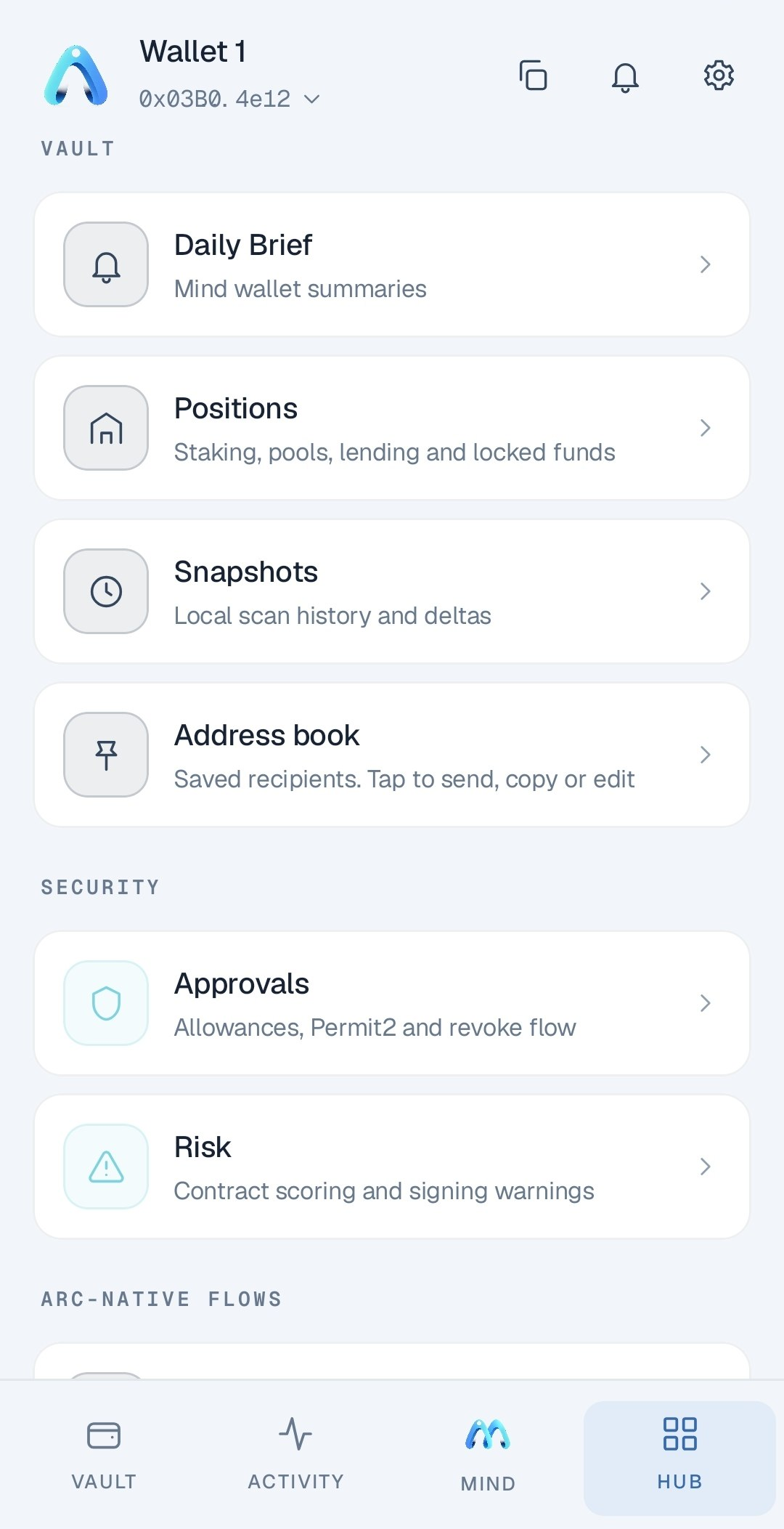
Hub keeps Gateway, Bridge, approvals, Daily Briefs, WalletConnect and network settings in one operational surface.
 Meet Mind
Mind combines loaded wallet state with public Arc explorer data, so answers can cover transactions, contracts, routes and warnings without touching secrets.
MindI can read the hash, identify the method, trace token movement and summarize the result.In contextThe chat opens over reviews, result screens, token details and activity details, then responds from the screen the user is already viewing.
MindI can check amount, destination chain, gasless mode, fees, recipient and missing requirements.Explorer awareFor verified Arc contracts, Mind can inspect read functions, contract metadata and public address data without signing access.
MindIf it is verified, I can list readable functions and translate what they return.Risk checksMind can review approvals, connected dapps, suspicious contracts, swap routers, bridge groups and Gateway records from the data iArcana loads.
MindI can compare allowance size, spender, token and known app data before you decide to revoke.In the browserInside the in-app browser, Mind can open over the dApp you are viewing and read it live, read-only, to explain the page, find a contract address, list links and flag risks before you connect or sign.
MindI can read the open page, pull the contract address and check the links before you connect.Secrets excludedSeed phrases, private keys, passwords, vault keys, biometrics and API keys are never sent to Mind.
MindI can use loaded wallet data, but I cannot see or export your recovery phrase.iArcana includes a real multi-tab dApp browser. Sites connect straight to your wallet, and Mind can open over any page to read and explain it before you act.
A multi-tab browser inside the wallet. Visit any dApp and it connects directly through standard provider interfaces (EIP-1193 and EIP-6963), with favorites, history and search.
When a site opens its wallet picker, a native Connect with iArcana overlay appears, so the dApp recognizes iArcana as the wallet without copy-paste.
Mind can open over the current dApp page and read it, read-only, to summarize it, find a collection's contract address, list links and surface risks before you connect or sign.
Connection and signing requests are reviewed inside iArcana with Mind's help, while signing stays local on the device. Mind never clicks, types or signs for you.
iArcana uses Circle Gateway for unified USDC balance and CCTP for bridge flows, then presents each operation before it becomes a signature.
Deposit, spend and withdraw unified USDC with source and destination details visible.
Bridge operations are grouped as one journey, while each hash stays available.
Mint requirements, gasless options and fees are surfaced before review.
Explorer events and local Gateway records appear as wallet history the user can inspect.
Hub gathers the tools that deserve their own space: approvals, WalletConnect, Daily Briefs, network settings and deeper activity views.
Large allowances can be flagged, opened directly and revoked after the user reviews the spender.
Connected dapps, requested chains and signing methods are shown before approval.
Mind can generate scheduled wallet summaries in the language selected by the user.
RPC URL, chain ID and explorer links can be adjusted when an endpoint fails.
iArcana can guide complex actions, but private keys and recovery phrases stay local.
Generated or imported keys stay on the device and are used only inside signing flows.
Sensitive actions can require biometric or password confirmation.
Screenshot and recording protection can be enabled from settings.
Mind receives wallet context, never private keys, seed phrases, passwords or API keys.
The important details about custody, Mind, the dApp browser and Circle rails.